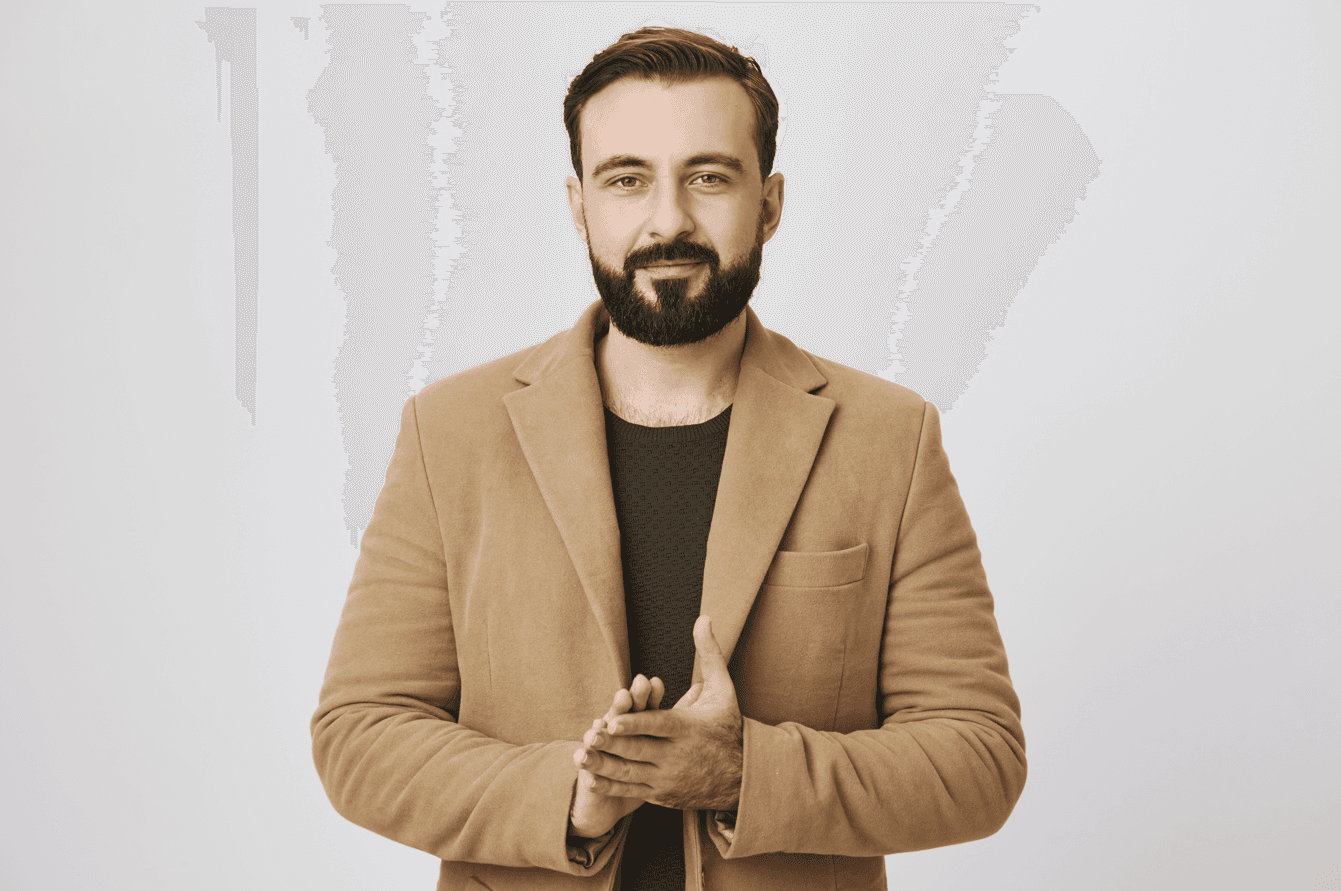

Most founder photos are trying to solve the wrong problem.
They are usually trying to look impressive, polished, or “CEO enough.” And that is exactly why so many of them end up feeling generic. You have seen the type: folded arms, expensive jacket, serious face, neutral background, and absolutely no clue what kind of founder this person actually is.
But a founder headshot is not just a professional photo. It is a compressed signal. Investors, candidates, customers, podcast hosts, and journalists are all reading a story out of that image long before they read your deck, your bio, or your product page. They are not just seeing your face. They are making a fast guess about how you think, how you lead, and what kind of company you are likely to build.
That is why this topic matters more than people think. The right founder headshot quietly reinforces the story your company is already telling. The wrong one creates friction. It makes people feel a mismatch, even if they cannot explain exactly why.
We at ProfileMagic keep seeing founders run into the same wall. They do not want a bland “startup CEO” portrait, but they also do not want a weird personal-brand fantasy shoot that makes them look like a different person. What they usually need is much simpler than that: a headshot that fits how they actually operate.
This guide is built around that idea. Not every founder should look the same, because not every founder plays the same role. Some founders are Builders. Some are Operators. Some are Visionaries. Some are Sellers. Each archetype can still look professional, but the trust signals are different.
Why Founder Headshots Matter More Than Most Founders Think
Founders often spend hours refining copy on their website and barely ten minutes thinking about the image beside their name. That is backwards.
Your founder photo shows up in more places than you probably realise:
- LinkedIn and other social profiles.
- Your company’s About or Team page.
- Investor decks and pitch materials.
- Podcast guest pages and conference speaker cards.
- Press features, interviews, and newsletters.
- Calendar booking pages and email signatures.
For many people, that photo is the very first “surface” of your brand they encounter. And because humans form impressions from faces extremely quickly, the image is doing psychological work before your words even get a chance.
This is not always fair, but it is real. People infer confidence, warmth, competence, reliability, and even ambition from faces. Then they use those quick impressions to decide whether to keep paying attention. In practical terms, your founder's headshot is not decoration. It is part of the opening sentence of your business.
And in the AI era, this gets even more sensitive. As synthetic visuals become easier to make, believable images matter more. People are becoming much better at sensing when a photo is too polished, too manufactured, or too disconnected from the actual human behind the company. So the goal is not perfection. The goal is credibility.
The Four Founder Archetypes and What Their Photos Need To Signal
Not every founder leads in the same way, and your image should not pretend otherwise. A better approach is to think in archetypes, not aesthetics.
The Builder
The Builder is product-close, craft-heavy, and usually more interested in making than posturing. This founder gets respect from depth, conviction, and substance.
A Builder headshot usually works best when it feels:
- Grounded.
- Clean.
- Focused.
- Slightly understated rather than theatrical.
The expression does not need to be intensely friendly. It just needs to feel real and composed. Builders often look strongest when the image says, “I know what I’m doing,” rather than “look at me.”
What usually goes wrong is when a Builder is photographed like a hyper-online personal brand. Too much energy, too much styling, too much “founder performance,” and the image starts fighting the person.
The Operator
The Operator is the founder who brings systems, reliability, discipline, and execution. Even if they are charismatic, the core story people should feel is control.
An Operator headshot tends to work when it signals:
- Clarity.
- Stability.
- Precision.
- Calm competence.
This often means cleaner backgrounds, stronger polish, slightly more structure in clothing, and an expression that feels dependable rather than dramatic. The Operator photo should make people think, “This person runs a serious machine,” not “This person loves attention.”
What breaks it is casual chaos. Messy styling, performative startup-casual vibes, or a photo that feels too sloppy can quietly undermine the very strengths this founder archetype is built on.
The Visionary
The Visionary is future-facing, category-shaping, and often narrative-driven. This founder is not just building a company. They are trying to pull people into a bigger idea.
A Visionary headshot can support that by feeling:
- Memorable.
- Energetic.
- Direct.
- Slightly more expressive than the Builder or Operator.
This is one archetype that can carry a little more personality in the image. Stronger eye contact, more presence, and a slightly more distinctive visual style can work well.
But this is also where people slip into nonsense fastest. A Visionary headshot should not become a guru poster. If the image starts looking like a campaign poster for your own mythology, you have gone too far.
The Seller
The Seller is externally oriented, persuasive, and energized by people. This founder is often the face of revenue, partnerships, customer acquisition, and distribution.
A Seller headshot should usually emphasize:
- Warmth.
- Accessibility.
- Confidence.
- High social legibility.
This is the archetype that can handle a stronger smile and a bit more direct friendliness. The image should feel like someone who can walk into a room, connect fast, and make people want to listen.
Where it goes wrong is when that warmth becomes slickness. If the photo feels too polished, too charming, or too “salesy,” trust can drop instead of rising.
The Archetype-Mismatch Problem
Here is where a lot of founder branding quietly goes wrong: the photo is not bad, but it tells the wrong story.
A Builder gets photographed like a motivational influencer. An Operator gets photographed like a casual creator. A Visionary gets flattened into a stiff corporate portrait. A Seller gets photographed with zero warmth, like they would rather be anywhere else.
None of these are technical failures. They are narrative failures.
And the reason they matter is simple: people feel mismatch very quickly. They may not consciously say, “This headshot does not align with the founder’s likely operating style,” but they will register that something about the image and the rest of the brand are not moving together.
This creates friction. The face says one thing, the company copy says another, and the audience ends up trusting neither as much as they could.
That is why the goal with founder headshots is not beauty in isolation. It is fit.
What All Good Founder Headshots Still Need, No Matter the Archetype
Even though the four archetypes differ, strong founder headshots still share a few non-negotiables.
It Still Has To Look Like You
This rule beats everything else. If someone met you tomorrow, would they recognise you from the photo without a weird moment of adjustment?
That means recent styling, realistic editing, and no fantasy-version face. If the image only works because it makes you look like a different person, it is not a strong founder asset.
Your Face Has To Be Easy To Read
Founder photos often get displayed small, so readability matters.
Good basics include:
- A clear, high-resolution image.
- Your face taking up enough of the frame to be recognisable.
- Lighting that keeps the eyes visible and the expression legible.
- A crop that works on LinkedIn, websites, and speaker cards.
It Has To Match Your Actual Market
The right founder headshot depends partly on the rooms you need trust from.
A B2B enterprise founder, a consumer creator-founder, a fintech operator, and a wellness founder may all need slightly different visual language. You do not need to cosplay your market, but you do need to understand it.
It Has To Work Across Surfaces
One overworked hero image is rarely enough. The smartest setup is usually a small founder photo system:
- One anchor headshot.
- One more polished media or speaking image.
- One softer, more humanising image for culture or hiring pages.
That gives you range without turning your visual identity into chaos.
The Founder Headshot Decision Lens
If you want a practical filter, use this three-part lens on any founder photo you are considering.
Lens 1: Recognition
Does this still feel obviously like you to people who know you well?
Lens 2: Archetype Fit
Does this image reinforce the type of founder you actually are, or does it push you into a generic role you are only performing?
Lens 3: Surface Fit
Can this image hold up on LinkedIn, your company website, press features, investor docs, and speaker pages without looking awkward or overdone?
A photo that passes all three is usually strong, even if it is not flashy. A photo that fails one of them may still look good in isolation, but it will be much weaker in the real world
How AI Headshots Fit Into Founder Branding Without Creating a Fake Persona
AI headshots can be genuinely useful for founders, especially when time is tight and consistency matters. They are fast, scalable, and make it easier to build a small image bank without organising a full-day shoot every time your role changes.
But they only help if they preserve the same three things we have already talked about: recognition, fit, and usefulness.
Where AI helps:
- It gives you multiple usable variants quickly.
- It makes updates easier as your role or company stage evolves.
- It helps unify your LinkedIn, company site, and media materials without waiting on a full production schedule.
Where AI goes wrong:
- It invents a different face.
- It smooths the life out of your features.
- It makes every founder look like the same venture-backed template.
This is why we at ProfileMagic push realism and archetype-fit over fantasy. A founder headshot should make people think, “That tracks,” not, “That looks like a totally different person.”
If the output makes you feel more like a believable version of yourself, it is doing its job. If it feels like an identity experiment, it probably is not.
Practical Guidance for Each Archetype
To make this easier to apply, here is a simple practical pass for each founder type.
Builder Checklist
A Builder usually looks strongest with:
- Simpler styling.
- Calm, focused expression.
- Backgrounds that feel clean but not flashy.
- Less emphasis on performance and more on substance.
Operator Checklist
An Operator usually looks strongest with:
- Cleaner polish and stronger structure.
- A composed, stable expression.
- A visual tone that suggests reliability and control.
- Very little visual noise.
Visionary Checklist
A Visionary usually looks strongest with:
- More distinct presence.
- Stronger eye contact.
- Slightly more memorable styling or tone.
- Enough personality to feel compelling, but not enough to feel theatrical.
Seller Checklist
A Seller usually looks strongest with:
- More warmth in the face.
- A friendlier expression.
- Slightly more energy overall.
- A look that feels direct and easy to connect with.
The archetype is not a costume. It is a way to clarify which strengths your image should support instead of accidentally hiding.
Build a Small Founder Photo System, Not One Overworked Hero Image
One reason founders get stuck is because they are trying to make one photo do every job. That usually creates compromise everywhere.
A better approach is to build a small system.
The Anchor Founder Portrait
This is your main image for LinkedIn, your company team page, and your deck bio. It should be the most recognisable, archetype-fit version of you.
The Media / Speaking Portrait
This version can be a touch more polished or formal, suitable for press features, speaking pages, podcasts, and event bios.
The Softer Humanising Image
This is the photo that works well on hiring pages, newsletters, social posts, or founder letters where you want to feel more human and less official.
We at ProfileMagic usually recommend that founders stop searching for one magical image that does everything and instead build a tiny system around one anchor headshot plus a couple of support images. It is more flexible, and it gives each surface what it actually needs.
Common Founder Headshot Mistakes
There are a few mistakes that show up again and again.
Looking Too “CEO”
This is the problem where the image tries so hard to communicate authority that it stops feeling real. Too much costume energy, too much posture, too much rehearsed seriousness.
Looking Too Casual For Your Market
Founders sometimes overcorrect in the other direction and end up looking so relaxed that enterprise buyers, investors, or senior hires do not know how seriously to take them.
Looking Like a Different Person on Every Platform
If your website, LinkedIn, and speaker page all show different visual versions of you, you lose one of the biggest advantages of a strong founder image: recognition.
Mistaking Polish for Trust
The cleanest, glossiest, most expensive-looking portrait is not always the most believable one. And for founders, believable usually wins.
FAQs
1) Should founders optimize for investors or customers first?
Usually you should optimize for whichever audience is most likely to meet your face first. But ideally, a strong founder photo should hold up with both.
2) Can one founder fit more than one archetype?
Yes. Most founders are blends. But there is usually one dominant mode that people most need to trust you in first.
3) Are AI founder headshots okay?
Yes, as long as they still look like you and preserve your archetype fit instead of flattening you into a generic startup stereotype.
4) How often should founder headshots be updated?
When your look, company stage, or public role changes enough that the current image no longer feels accurate.
Conclusion: The Best Founder Headshot Makes Your Story Easier To Believe
This is not a vanity project. It is a clarity project.
A great founder headshot helps people believe the story they are already reading about you and your company. It supports your actual strengths. It makes your brand easier to process. And it gives people one less reason to hesitate when they decide whether to invest, join, buy, or reply.
If you want founder headshots that feel modern without flattening you into a generic startup stereotype, we at ProfileMagic are trying to solve exactly that problem: realism, consistency, and images that still feel like the founder behind the company.
Also Read: Real Estate Agents, Lawyers, Coaches: The 3 Professions Where Headshots Print Money