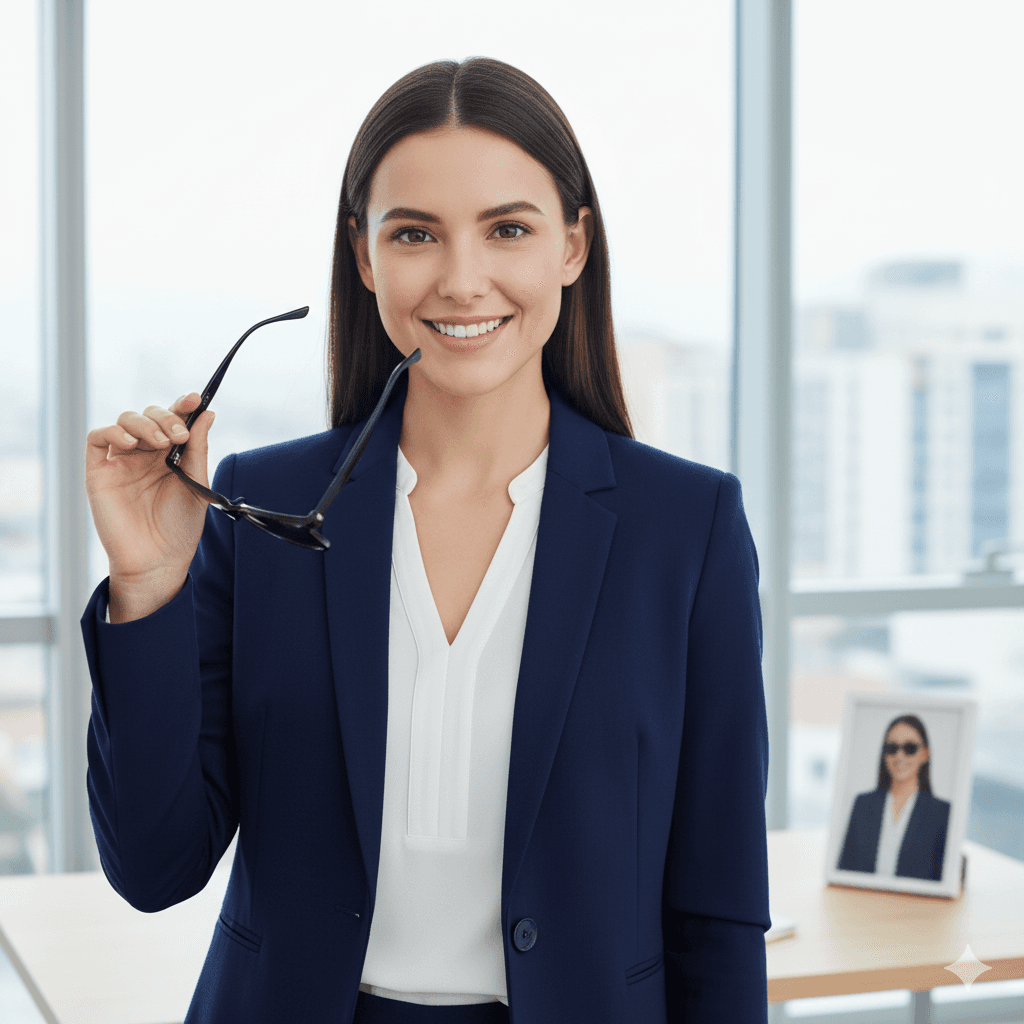

I see it at least once a week scrolling through professional networks. Someone with decent credentials, solid experience, maybe even an impressive job title – and they're wearing sunglasses in their profile photo. Sometimes it's aviators. Sometimes it's those wraparound sports sunglasses. Sometimes it's the kind of designer shades that cost more than my monthly grocery bill.
And every single time, my first thought is: "What are they hiding from?"
I'm not alone in this. A friend who works in recruiting told me she automatically skips profiles with sunglasses photos when sourcing candidates. "I don't have time to wonder if someone's going to be weird," she said. "If they can't follow basic professional norms in their photo, what else are they going to be difficult about?"
The most common defense I hear? "But it's my aesthetic. I'm building a personal brand."
Cool. Your aesthetic is unemployed.
Nobody Trusts a Face They Can't See
Here's the thing about sunglasses in professional photos – they break the most basic rule of human connection. Eyes matter. Not in some poetic, windows-to-the-soul way. In a very practical, this-is-how-humans-decide-who-to-trust way.
Research has consistently shown that eye contact is fundamental to building trust. When you obscure your eyes behind dark lenses, you're blocking the primary way people assess whether they can trust you. It's not about looking good. It's about looking like someone worth doing business with.
Think about it. When was the last time you saw a CEO's headshot with sunglasses? A doctor's profile photo with aviators? A lawyer's website with them rocking Ray-Bans? Never. Because professionals understand that credibility requires showing your face – all of it.
Derek eventually sent me a longer email defending his choice. "I look better in sunglasses," he explained. "My eyes are kind of small and I feel like the glasses balance out my face better."
I get it. We all have features we're self-conscious about. But you know what looks worse than small eyes? Looking like you're about to sell someone a timeshare in Florida or ghost them after a Venmo transaction.
The "But Famous People Do It" Defense
Every time I bring this up, someone inevitably mentions a celebrity or influencer who rocks sunglasses in their profile photos. "What about [insert tech founder or musician here]? They wear sunglasses in all their photos!"
Yes, and they're also worth $500 million or have 10 million followers. You are not. Sorry.
When you're already famous, established, or wealthy enough that people seek you out, you can break the rules. Anna Wintour can wear sunglasses indoors. Kanye West can have a completely black Instagram profile. Elon Musk can tweet literally anything. They've earned that privilege through decades of work and achievement.
You haven't. And trying to copy their style when you're still building your reputation just makes you look like you don't understand how professional credibility works.
The same logic applies across industries. As I wrote about before in my post on personality showing through in professional photos, there's a difference between being authentically yourself and actively sabotaging your professional image. Sunglasses aren't personality – they're a barrier.
What You Think You're Communicating vs. What You Actually Communicate
What you think: I'm cool, mysterious, confident, and unbothered. I'm the kind of person who's too busy being successful to care about conventional professional standards.
What you actually communicate: I'm hiding something. I might be unemployable. I don't understand basic professional norms. I'm probably going to be difficult to work with. There's a non-zero chance I'm wanted for fraud.
I've talked to hundreds of professionals who've experimented with sunglasses photos, and the pattern is always the same. Lower response rates on LinkedIn messages. Fewer profile views. Less engagement on posts. People just scroll past because something feels off, even if they can't immediately articulate what.
Sarah, a real estate agent from Phoenix, learned this the hard way. "I'm in Arizona," she told me. "Everyone wears sunglasses here all the time. I thought it made sense for my brand – showing I'm local, outdoorsy, active."
Her business was slow. Really slow. After six months of struggling to book showings, she finally updated her profile photo to a normal headshot without sunglasses. Within two weeks, she had three new clients reach out directly through LinkedIn.
"Same credentials, same experience, same listings," she said. "The only difference was people could finally see my face."
The Psychology of Hidden Eyes
There's a reason witness protection programs don't just give people sunglasses and call it a day. Hiding your identity requires more than blocking your eyes, but blocking your eyes is a pretty good start.
Research from the Max Planck Institute for Human Development found that we make trustworthiness judgments based primarily on eye region appearance. When that region is obscured, our brains default to caution and skepticism. It's an evolutionary adaptation – if someone won't show you their eyes, there might be a reason.
In professional contexts, this skepticism translates directly to lost opportunities. Recruiters scroll past your application. Potential clients choose your competitor. Connection requests on LinkedIn get ignored because something about your profile feels sketchy.
And here's the worst part – you might not even realize it's happening. Nobody sends a rejection email saying "we didn't hire you because of your sunglasses photo." They just ghost you and move on to someone who looks more trustworthy.
But What If I Really Do Look Better in Sunglasses?
Then you need better photos, not sunglasses.
If you genuinely think you look significantly worse without sunglasses, the problem isn't your eyes. It's the lighting, angle, or quality of your current headshots. Good photography can make anyone look professional and approachable.
The features you're self-conscious about? Most people won't even notice them in a well-shot photo. They'll be too busy registering "professional," "trustworthy," and "competent" to worry about whether your eyes are perfectly symmetrical or your nose is exactly the right size.
I've seen people with all kinds of facial features succeed professionally. Small eyes, big eyes, asymmetrical features, acne scars, you name it. What they all have in common is that they let people actually see their faces.
Marcus, a software engineer who'd been wearing sunglasses in his LinkedIn photo for two years, finally updated his headshot. "I was worried people would notice my eyes are uneven," he admitted. "But you know what? Not a single person has ever mentioned it. Instead, I started getting way more recruiter messages and connection acceptances."
The Rare Exceptions That Prove the Rule
Look, there are exactly three acceptable reasons to wear sunglasses in a professional context:
- You're an ophthalmologist specializing in sunglasses, and it's literally demonstrating your product
- You have a medical condition that makes your eyes extremely light-sensitive
- You're already so successful in your field that you don't need to care about conventional professional standards
If none of those apply to you, take them off.
And even then – even if you technically have a reason – ask yourself if the sunglasses are helping or hurting your professional goals. Because 99% of the time, they're hurting.
What Actually Works Instead
If you're genuinely concerned about how your eyes look in photos, here are strategies that don't involve blocking them entirely:
Work with better lighting. Natural light from a window tends to be way more flattering than overhead fluorescents. It softens features and reduces harsh shadows that might be making your eyes look smaller or tired.
Adjust the angle. Sometimes shooting from slightly above eye level can make eyes appear more open and engaging. A professional photographer (or even just a friend with a decent phone camera) can help you find your best angle.
Make sure you're well-rested. Bloodshot eyes and dark circles make everyone look less professional. Get some sleep, use eye drops if needed, and take your photo when you're actually feeling alert.
Consider glasses if you wear them. Regular prescription glasses can actually frame your eyes nicely and add to a professional appearance. Just make sure there's no glare on the lenses.
If you're still not confident in your headshots after trying these approaches, tools like ProfileMagic can help you generate professional-looking photos that capture you at your best – eyes fully visible and all.
The Bottom Line
Your professional headshot has one job: to make people trust you enough to want to work with you, hire you, or at least respond to your message. Sunglasses actively sabotage that goal.
I don't care if you think they look cool. I don't care if that's your "brand." I don't care if you have a mild insecurity about your eye shape. The professional world doesn't care about any of that either – they just see someone who looks like they're hiding something.
Derek eventually updated his LinkedIn photo. Took off the sunglasses, got a simple professional headshot with good lighting and direct eye contact. Within a month, his response rate on cold emails tripled. Same pitch, same credentials, same portfolio. The only difference was that potential clients could finally see who they'd be working with.
Your sunglasses might be your favorite accessory. They might make you feel more confident in social situations. That's fine – wear them to brunch, wear them at the beach, wear them whenever you want in your personal life.
But in your professional headshot? Take. Them. Off.
Nobody's hiring the Unabomber.