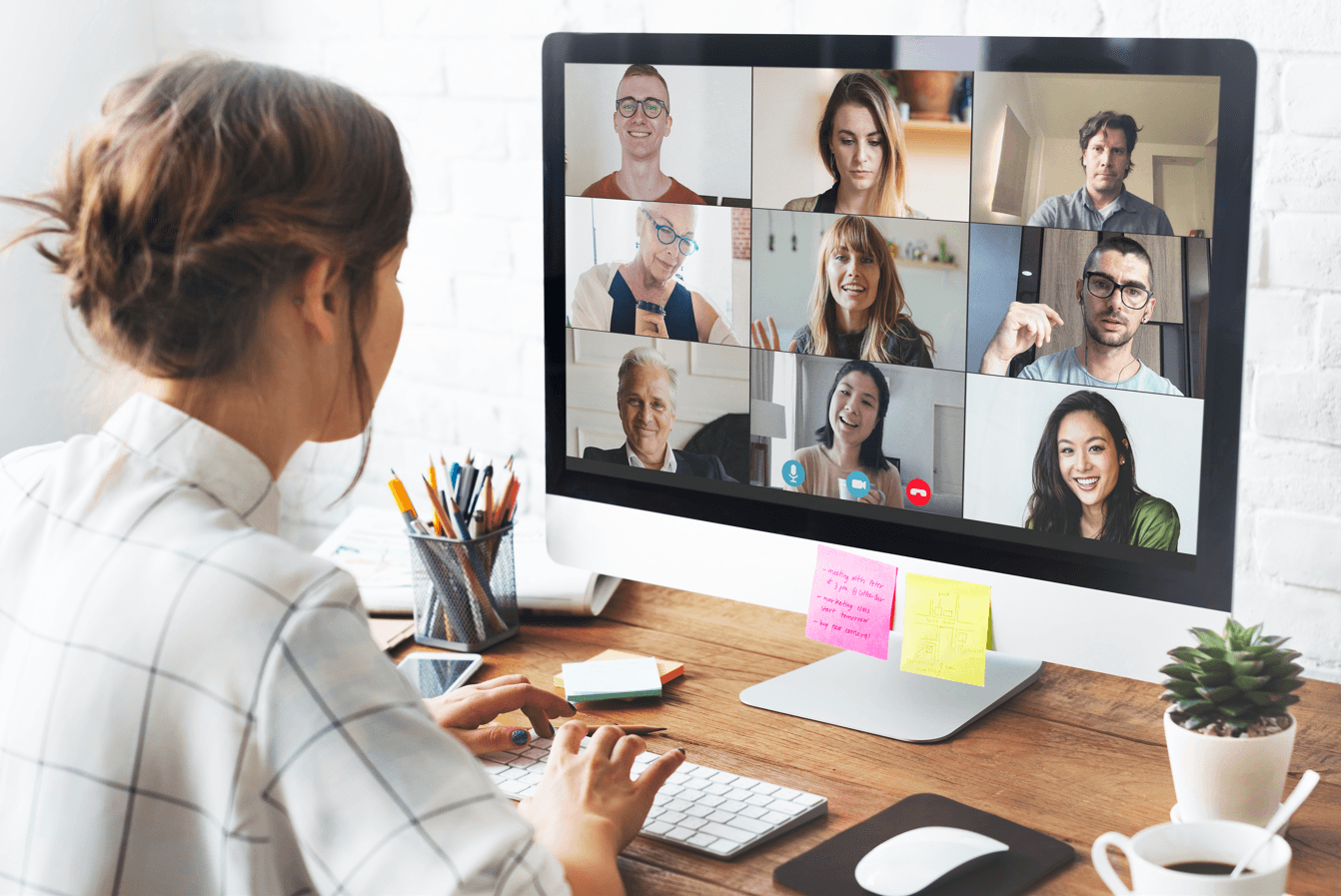

A lot of companies do not realize their team page has become a quiet branding problem until someone finally looks at it properly. The product may be strong, the messaging may be polished, and the website may feel premium overall, but then the team section tells a different story. One person has a cropped LinkedIn photo, another has a casual selfie, another still has an old office portrait from years ago, and a few newer employees do not have a proper image at all.
This happens even more often in remote and hybrid companies because people are spread across cities, time zones, and work setups. There is no one day where everybody stands in the same office, gets photographed under the same lighting, and walks away with matching images. So slowly, without anyone planning it, the team page starts looking like a collection of unrelated photos rather than one company with one standard.
That is exactly why more businesses are switching to AI team headshots for team pages. It is not only about speed, and it is not only about saving money. It is really about consistency, easier onboarding, faster updates, and a cleaner way to present a remote team that still needs to look credible online.
Quick Answer: Why Companies Are Moving to AI Team Headshots
- Remote and hybrid teams are difficult to photograph consistently.
- Traditional team shoots are harder to organize across locations.
- Companies want a repeatable standard, not random photo submissions.
- New hires need to be added without waiting months for another shoot.
- Team pages, decks, LinkedIn profiles, and PR kits all benefit from visual consistency.
- The real value is not just getting photos, but building a system that scales as the company grows.
Why Team Pages Break So Easily in Remote Companies
In an office-first company, it is still possible to schedule a photographer, gather people in one place, and create a uniform visual identity in a single day. But remote companies rarely work that way. Some employees are hired from different cities, some from different countries, and some are onboarded at completely different times. Because of that, headshots are usually collected in pieces. One person shares an old photo from a previous company, another sends a quick mobile image, and someone else says they will send it later and never does.
Over time, this creates a page that looks visually inconsistent even if the people on it are excellent. And that matters more than many companies assume.
A team page is not just a decorative section. It is one of the places where a visitor checks whether the brand feels real, organized, and trustworthy. When the images look inconsistent, the company can start feeling less established than it actually is. That does not mean every team page needs a luxury photoshoot, but it does mean visual inconsistency quietly chips away at trust.
The “One Company or Five?” Test
There is a very simple way to judge whether your current team page is working.
Open the page and scroll quickly.
- Do the images look like they belong to one brand standard?
- Are the backgrounds, crops, and quality reasonably aligned?
- Do new hires look visually disconnected from older hires?
- Does the page feel intentional, or does it feel patched together over time?
If the answer feels uncomfortable, then the issue is probably not your employees. It is your workflow. And that is the exact reason AI headshot systems have become more relevant for remote businesses.
Why Companies Are Choosing AI Instead of Traditional Team Shoots
Traditional headshot photography still has value, and for some brands it will always remain the best option. But for remote and hybrid teams, the operational friction gets heavy very quickly. You have to coordinate schedules, find a photographer, wait for edits, manage no-shows, and then repeat some version of the process every time new people join.
That is where AI changes the conversation.
Instead of treating headshots as a once-a-year event, companies can start treating them as an ongoing system. Employees can submit images from wherever they are, the visual style can be standardized more easily, and new hires can be added later without rebuilding the entire look of the team page. That shift is important because fast-moving companies are not just trying to get team photos done once. They are trying to avoid a recurring admin mess.
What Companies Actually Want From AI Team Headshots
This is where many people misunderstand the category. Businesses are not looking for dramatic AI portraits or over-styled images that look clever for five seconds. What they actually want is much simpler and much more practical.
They want headshots that still look like the real people on the team. They want a team page that feels visually consistent. They want a setup where new employees can be added without lowering the overall standard. They want backgrounds, attire, and framing that match the tone of the brand. And they want all of that without creating unnecessary chaos for HR, operations, or marketing.
That is the difference we at ProfileMagic would want to make clear in this conversation. Companies are not looking for flashy AI pictures. They are looking for a dependable process that helps the whole team look polished, consistent, and genuinely usable across real business touchpoints.
The Real Advantages of AI Team Headshots for Remote and Hybrid Teams
When the system is done properly, the advantages go beyond convenience.
First, there is visual consistency. That one benefit alone can change how a team page feels. When lighting, cropping, background style, and overall tone are aligned, the page instantly feels more intentional.
Second, there is speed. A growing company does not have to wait for the next in-person shoot just to add one new team member properly.
Third, there is flexibility. The same headshots can often support the website, internal bios, speaker pages, decks, press mentions, and even individual professional profiles.
And fourth, there is scale. This is one of the biggest reasons the model works for modern teams. Once a company finds a visual standard that works, it becomes much easier to maintain that standard as the organization grows.
Where AI Team Headshots Can Go Wrong
At the same time, it would be a mistake to pretend AI solves everything automatically.
The biggest risk is likeness. If the image looks polished but does not really look like the employee, then the photo stops being useful. Another problem is over-processing. Some results look clean at first glance, but when you actually study them, the face feels waxy, the smile feels synthetic, or the whole image looks too perfect to be believable.
There is also the input issue. If employees upload poor-quality photos, the final results can become inconsistent no matter how good the system is supposed to be. And then there is the trust layer, because any company using AI for people's images should still care about approvals, privacy, comfort, and internal clarity around how those images are being used.
That is why companies should not judge AI headshots only by how impressive the best sample looks. They should judge them by whether the average output feels credible, consistent, and true to the actual team.
The New-Hire Drift Problem Most Companies Underestimate
A lot of businesses think the challenge is getting headshots created once. But that is usually not the real problem.
The real problem comes later.
Three months pass, four new people join, two employees move into leadership roles, one person needs a speaker bio photo, and suddenly the team page starts drifting again. This is where many companies fall back into the same inconsistency they were trying to solve in the first place.
So the smarter question is not, “How do we get team headshots done?”
The smarter question is, “How do we maintain a visual standard as our company changes?”
That is the lens that makes AI genuinely useful. It turns headshots from a one-time task into an ongoing workflow.
How to Evaluate an AI Headshot Solution for Your Team
If a company is seriously considering an AI-based workflow, the decision should be based on more than just attractive sample images.
Use this checklist:
- Does the output preserve facial likeness well enough that colleagues and clients would instantly recognize the person?
- Can the company keep a consistent visual style across the whole team?
- Is the workflow simple enough for HR, operations, or marketing to manage without friction?
- Can new hires be added later without breaking the visual standard?
- Are the final images actually usable across website pages, decks, and professional channels?
- Is it clear how approvals, revisions, and image handling will work?
- Does the process feel trustworthy rather than gimmicky?
At ProfileMagic, we would naturally frame this choice around workflow quality as much as image quality, because teams do not struggle only when the pictures are weak. They struggle when the rollout becomes confusing, inconsistent, and difficult to maintain.
The Team Headshot Rollout Checklist for HR, Ops, and Marketing
A team headshot system works much better when the internal expectations are clear before anyone uploads a photo.
Here are the questions companies should settle first:
- What background style fits the brand best?
- How formal or relaxed should the final headshots feel?
- Who approves the final images before they go live?
- Will the same photos also be used on LinkedIn or only on the website?
- What happens if an employee feels the image does not look like them?
- How will future hires be added in a way that matches the existing team page?
This kind of planning sounds small, but it prevents a lot of confusion later. And that matters because the goal is not just to generate images. The goal is to create a standard that can keep working even as the company grows and changes.
When AI Team Headshots Make Sense, and When They Do Not
AI headshots make a lot of sense for remote-first teams, hybrid companies, agencies, SaaS businesses, consultancies, and other growing organizations where people join from different locations and visual consistency matters.
They are especially useful when a company wants to look polished without repeatedly organizing traditional photo shoots.
At the same time, they may not be the perfect fit for every situation. A luxury campaign, a very high-end editorial brand, or a founder portrait meant for a major media feature may still benefit more from a custom photographer-led process. Some companies may also prefer not to use AI-based image workflows at all, depending on internal policy or brand philosophy.
That is why the smartest position is not that AI should replace every photographer. It is that AI solves a specific workflow problem very well when the use case is right.
What the Best Remote Team Headshot Strategy Actually Looks Like
The best strategy usually looks less exciting than people expect, but it works better because it is grounded.
The company decides the visual direction first. It sets expectations around style, background, and use case. Employees submit better input images instead of random low-quality photos. Someone internally owns approvals. The final outputs are checked for both likeness and consistency, and the system stays ready for future hires rather than being forgotten after one launch.
This is the lens we at ProfileMagic would want readers to leave with. A strong team page is not created by generating images for the sake of it. It is created by building a repeatable visual standard that can actually scale with the company.
Final Thoughts
Companies are not moving to AI team headshots just because the technology exists. They are moving because remote and hybrid work created a very practical brand problem that traditional workflows do not always solve efficiently.
A scattered team page makes a company look more fragmented than it really is. A consistent team page makes the same business feel more organized, more intentional, and more trustworthy.
That is why this shift matters. It is not about replacing human photography in every scenario. It is about giving modern teams a realistic way to look aligned online, even when they are distributed in real life.
FAQs About AI Team Headshots for Remote Companies
1) Are AI team headshots good enough for a company website?
Yes, they can be, as long as the images preserve real likeness and feel professional rather than artificial. The standard should be whether the final photos look credible enough to represent real people publicly.
2) Why do remote teams struggle to keep headshots consistent?
Because employees join from different locations, submit different kinds of photos, and rarely go through the same photography process at the same time. Without a system, inconsistency builds up naturally.
3) Can AI team headshots also be used on LinkedIn?
They can, provided the images still look like the person and match how they actually present themselves professionally. Consistency is helpful, but accuracy matters more.
4) What is the biggest mistake companies make with team headshots?
The biggest mistake is treating the task as one-time only. The real challenge is not just creating images once, but maintaining a visual standard as the team changes.
5) Are AI team headshots better than traditional photography?
Not in every case. Traditional photography can still be stronger for certain premium or highly customized needs. But for remote and hybrid teams, AI often solves the workflow problem more efficiently.
6) What should companies evaluate before choosing an AI headshot workflow?
They should look at likeness, quality, consistency, ease of rollout, future scalability, internal approvals, and whether the process feels transparent and manageable for the team.
Also Read: The ‘Founder Headshot’ Archetypes: Builder, Operator, Visionary, Seller